

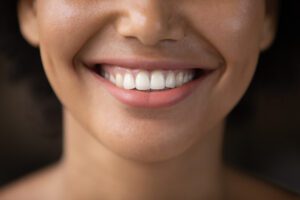
It comes as no surprise that a major Do-It-Yourself (DIY) trend is teeth whitening or bleaching. Although pharmacy-sold whitening can often improve the shade of your teeth, the disadvantages of over-the-counter kits far outweigh the benefits. For more effective and safer results, it’s recommended that you ask your dentist to perform in-office teeth-whitening services.
What are the Risks of DIY Whitening?
Harmful to the Gum Line
Over-the-counter teeth whitening kits contain varying levels of peroxides, otherwise known as bleach. If the product isn’t applied properly, the peroxide can cause serious damage to your gum line.
The problem that customers face is that DIY teeth-whitening products come as one size fits all. As our mouths come in all sorts of different shapes and sizes, DIY whitening strips or gel trays can often be too big or small. Either scenario can lead to unnecessary contact with your gum line. The last thing you want is bleach to burn your gums they’re especially sensitive and full of thousands of susceptible nerve endings.
In a dentist’s office, whitening trays are custom made for each patient in order to avoid the gums. As there’s a lesser risk of gum contact, they can use higher concentration of peroxides in stronger gels that ultimately yield better, whiter results.
Aggravated Dental Problems
If applied at the wrong time, do-it-yourself teeth whitening kits can make pre-existing dental problems worse. The bleach from the kits can find its way into any abscess of the mouth and cause immediate pain or worse, an infection.
It is important to make an appointment with your dentist before considering DIY teeth-whitening products. They can check for any cavities or gum disease that could be aggravated by the bleach. If you have a severe cavity, the bleach can travel as far as the root of the tooth and may lead to requiring root-canal therapy.
If there’s pre-existing gum disease like gingivitis or periodontitis, the bleach will burn the inflamed gums and even cause the loss of soft tissue. Aggravated gum disease could lead to serious illness as the bacteria from the gums can find its way to other parts of the body.
Spotted/Weak Results
Without the help of a dental professional, teeth whitening can lead to spotted or ineffective results. Most DIY treatments contain bleach concentrations between 10%-20% – somewhere in between is the safest bet for a bleaching agent. However, a large number of DIY teeth whitening kits don’t list the concentration on their box, making it impossible for the customer to choose a strength that’s sensitive to their oral health.
As users can’t tell how strong the bleaching product is, they may pick one with a lower concentration that produces weak or ineffective results. As it’s difficult to get a full view of our teeth, it’s common for users to miss patches when applying the gel or strips.
Damage to Tooth Enamel
Enamel is the protective layer around our teeth that protects it from daily forces like chewing, talking, biting and grinding. It is the hardest tissue in our body, but can be stained by things like caffeine, tobacco and food. These yellow-colored spots are one of the primary reasons why people whiten their teeth.
DIY teeth whitening kits are known to contain sodium bicarbonate and hydrogen peroxide – two chemicals that, if not applied properly, can cause erosion of the tooth enamel. If the enamel wears away, the layer of yellow dentin underneath becomes exposed and extreme pain becomes inevitable.
See Your Dentist
If you still decide to try over-the-counter teeth whitening, ask your dentist for more information or recommendations on which brand to use. They should also give you a full dental examination to make sure you don’t have any pre-existing problems. Whether you or a professional apply the product, it’s important that you’re educated on the risks with a clean bill of oral health.
Professional solutions used by your dentist are stronger than those in over-the-counter kits, so your teeth will whiten more quickly. He or she can also make sure that sensitive gums don’t get more irritated.
Sources: Worldental.org, WebMD